The Moment You Realize Metal Isn’t Your Only Option
Maria, a 34-year-old graphic designer from Milford, always hid her crooked lower teeth during client meetings. Traditional braces felt out of step with her design-forward image—until a friend pulled a tiny, crystal-clear tray from her purse and said, “They’re straightening my teeth right now.” Two weeks later, Maria sat in our chair for a comprehensive exam and 3-D scan. Six months after that, her smile matched the clean lines she brings to every logo. Her only regret? Not starting sooner.
Stories like Maria’s illustrate why adult orthodontics has surged 40 percent nationwide over the past decade. If straight teeth have always felt out of reach—too visible, too time-consuming, too uncomfortable—clear aligners rewrite the script. Below, you’ll see exactly how they work, who benefits most, and what daily life looks like once those feather-light trays snap into place.
How Clear Aligners Quietly Move Teeth
Imagine dozens of micro-nudges rather than one big shove. Each custom tray is molded a hair straighter than your current alignment. When you pop it in, gentle, even pressure tells the periodontal ligament to remodel—bone dissolves on one side of the root and reforms on the other. Two weeks later, that shift becomes your new baseline, and you graduate to the next tray. Over 20–30 sets, those imperceptible nudges add up to a major transformation without the wire-tightening appointments of traditional braces.
Attachments: Tiny Anchors, Big Impact
You may notice tooth-colored “buttons” on certain teeth; these act like handles, letting the aligner grip and rotate stubborn bicuspids or lower canines. They’re barely visible and pop off at the end of treatment.
Sleep-Friendly Wear Schedule
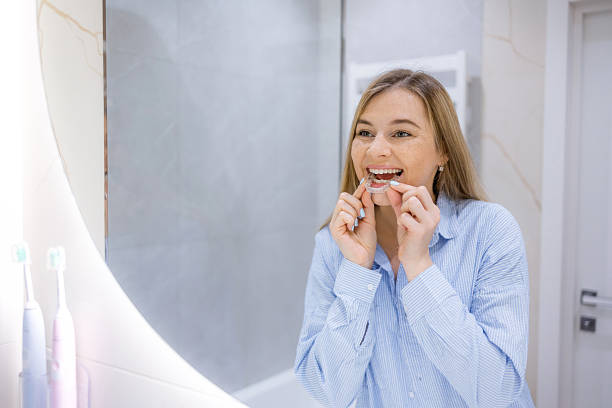
Most patients wear aligners 22 hours a day, removing them only to eat, drink anything but water, and brush. For night-shift workers or parents chasing toddlers, that consistency is often easier than juggling rubber bands and bracket hygiene.
Are Clear Aligners Right for You?
Quick answer: Clear aligners correct mild to moderate crowding, spacing, and rotated teeth as efficiently as braces—often in 6–18 months—provided you wear them as instructed.
That said, they’re not one-size-fits-all. You’re an ideal candidate if you:
- Value Discretion – Professionals, teachers, and on-camera personalities love their near-invisibility.
- Can Commit to Wear Time – Missing more than two hours a day stalls progress.
- Have Healthy Gums and Bone – Active periodontal disease needs treatment first; our team may recommend scaling & root planing to stabilize the foundation.
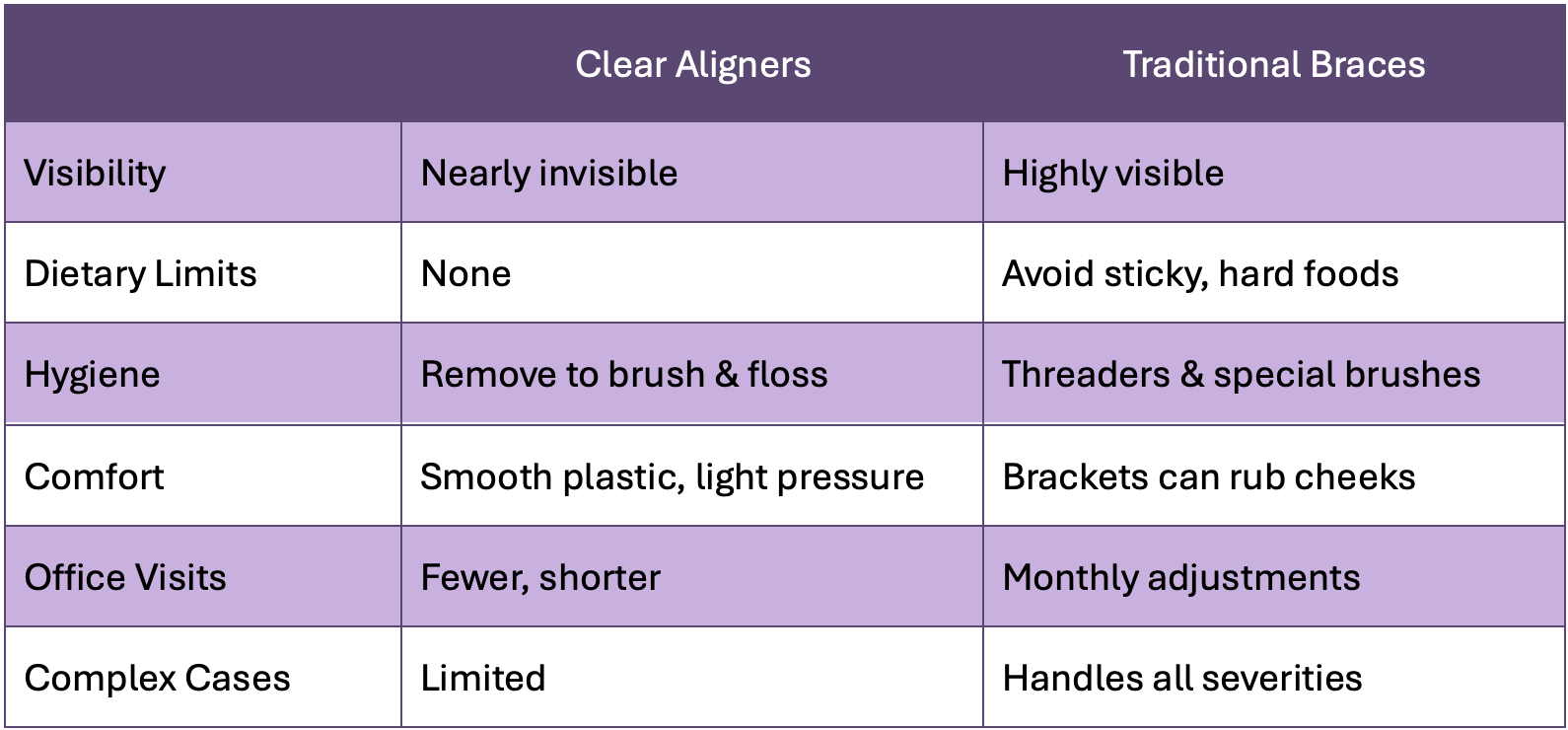
- Seek Fewer Office Visits – After the initial fitting, most check-ins are quick progress scans every six to eight weeks.
If you have severe bite discrepancies or jaw growth issues, traditional orthodontics (and occasionally surgery) deliver better results. Still unsure? A 3-D CBCT scan at our Highland office tells us—in minutes—whether your goals align with aligners.
Your Treatment Journey, Step by Step
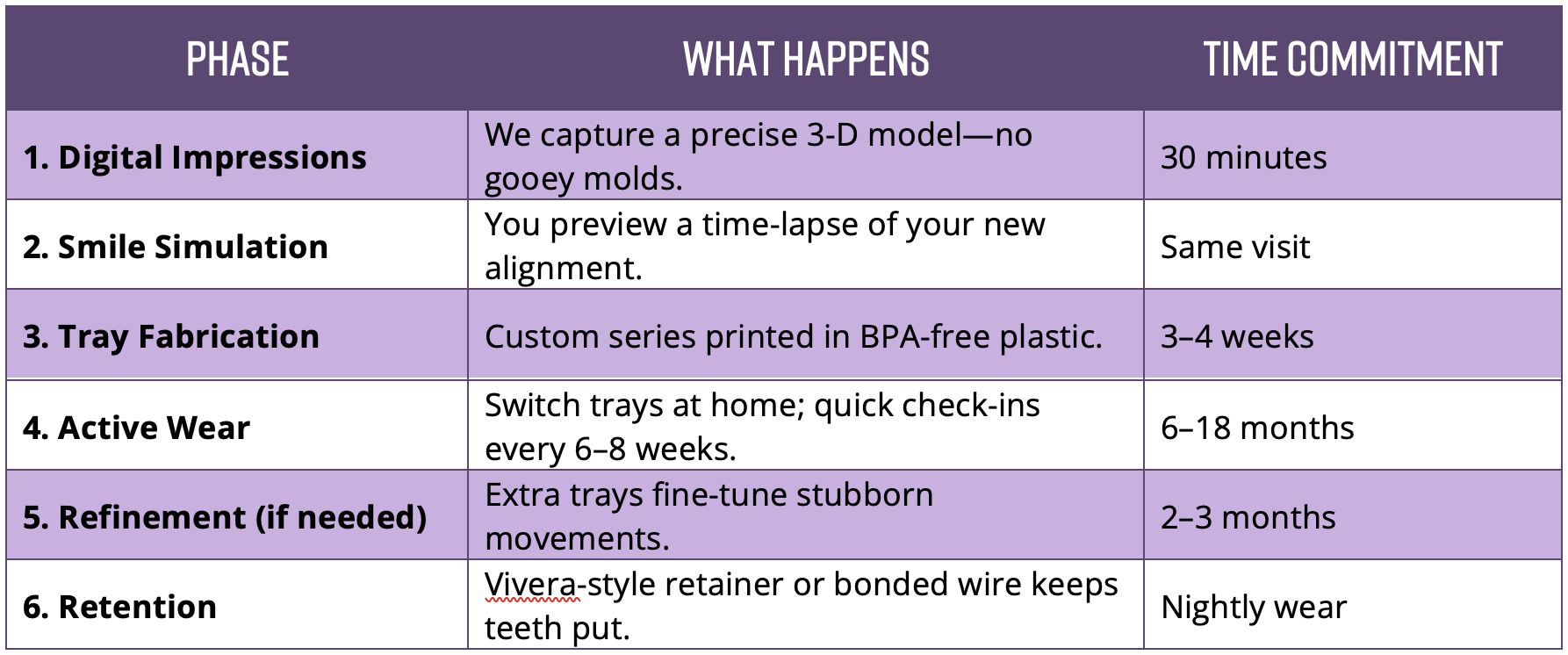
At Fortson Dentistry in Highland, your plan is mapped from a 3-D scan and your goals, so you’ll know exactly how many trays you’ll wear, how often to switch, and when to expect visible changes. We’ll show you a side-by-side preview of your projected results, send you home with your first sets the day they arrive, and check progress every few weeks—tweaking with refinement trays if any tooth proves stubborn. Remember, the timeline below is an average; your biology and consistency drive the pace. When you’re ready to start, explore how our clear aligners process works step by step.