The Morning You Notice It
Emma noticed it in the most unfair lighting possible, her car mirror at 7:42 a.m., January air still biting her cheeks. She had coffee in one hand, her phone in the other, and that quiet, start-of-the-year optimism in her chest. Then she smiled at a text from her sister, caught her reflection, and felt her confidence dip like a stone.
Not panic, not vanity, just that sharp little thought you do not invite but still believe, “Why do my teeth look… tired?”
She pressed her lips together, then smiled again, wider this time, like she could outsmile the problem. But the yellow tone along the edges did not budge. She stared for an extra beat, then muttered, half amused and half annoyed, “It is literally January, can I have one clean slate?”

By the time she pulled into work, she had already opened three tabs, “best teeth whitening,” “does whitening damage enamel,” and “why are my teeth yellow even though I brush.”
And that is how it starts for most people. Not with a makeover, but with a moment where your smile stops feeling like yours.
The Real Goal Is Not “White”
Emma did not want blinding, celebrity-bright teeth. She wanted the version of herself that did not hesitate before laughing. The one who smiled in photos without doing that tight-lipped “polite smile” that says, I am here, but my confidence is not.
That is the part people rarely say out loud. Teeth whitening is not just about shade. It is about permission to feel unselfconscious again, especially at the beginning of the year when you are setting goals, meeting new people, and saying yes to things you postponed.
She told herself she was being silly. Then she remembered the holiday pictures. In every one, her lipstick looked great, her hair looked fine, and her teeth looked like they were holding onto November.
If you have ever looked at a photo and thought, “Why does my smile look different than it feels?” you get it.
What Stains Teeth, Even When You Brush
Emma’s first instinct was to blame coffee, because coffee is the obvious villain and also, she was not giving it up. But stains are sneakier than that.
Here is what she learned, and what I tell patients when they sit in the chair and whisper, “Is this normal?”
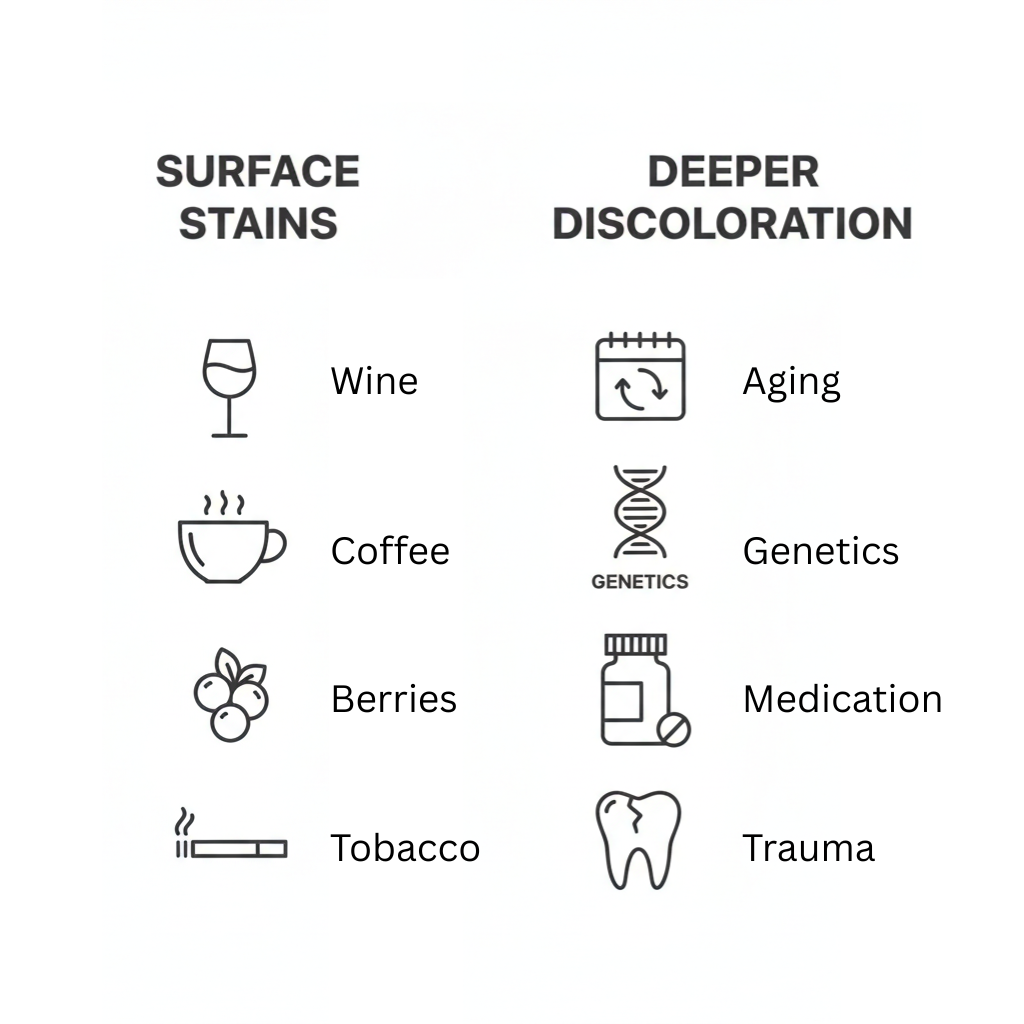
- Surface stains are like a tea ring on a mug. Coffee, red wine, tea, cola, berries, and tobacco leave pigments that cling to enamel.
- Deeper discoloration is more like the color of the mug itself changing. Aging, genetics, certain medications, old trauma, and thinning enamel can make teeth look darker.
And brushing is not a magic eraser. Think of enamel like a white hoodie. You can wash it, sure, but if you spill espresso on it every day, you will still notice the “lived in” look over time.
Emma’s big surprise was learning that some “yellow” is not dirt, it is the natural color of dentin underneath enamel. When enamel gets thinner, your teeth can look warmer even if they are clean.
That is why the smartest whitening starts with a baseline: make sure your teeth and gums are healthy first. If you are overdue for a checkup, a comprehensive exam can catch the stuff you cannot see in the mirror, like tiny cracks, early decay, or gum irritation that can make whitening uncomfortable later. Start with a comprehensive dental exam.
%20(12).png)
The Whitening Choices That Sound Similar But Are Not
Emma’s browser history got chaotic fast. Strips. Pens. Trays. “LED kits.” Whitening toothpaste. Something with charcoal that looked like it belonged in a science experiment.
So she made a list, like a sensible adult, except the list ended with, “But what actually works?”
Here is the real breakdown, without the hype.
Whitening Toothpaste
This is the “tidy your room” option, not the “move into a new house” option. Whitening toothpaste can help with surface stains, but it will not dramatically change your overall shade.
If you want subtle brightening and maintenance after professional whitening, it can be useful. If you want a noticeable change for your January reset, it is usually not enough.
Strips And Over The Counter Kits
These can work for some people, especially if discoloration is mild. But the tradeoffs are real.
- The gel concentration is limited, so results vary
- Strips do not wrap evenly around every tooth shape, so you can end up with spotty brightening
- Gum irritation can happen, especially if gel spreads
Emma tried strips once years ago. She remembered that zingy sensitivity and the weird taste that stuck around like an uninvited guest.

%20(13).png)